
Finding the right pillow is about more than choosing between soft and firm. Pillow height, shape, material, and the way it accommodates your head, neck, and shoulders can all influence how comfortable you feel throughout the night.
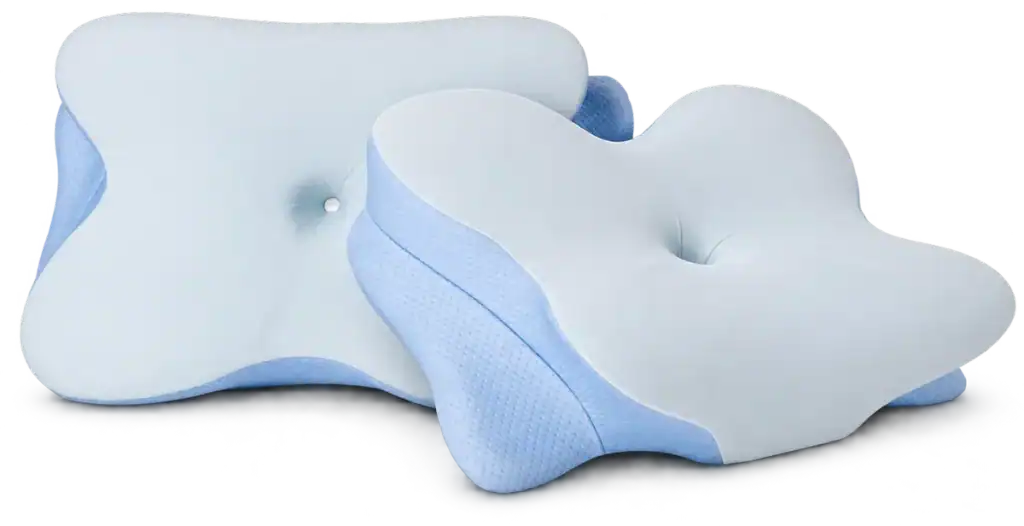
The Derila Ergo Memory Foam Pillow takes a different approach from conventional rectangular pillows. Its butterfly-inspired shape combines a contoured head cradle, raised support areas, shoulder cutouts, and dedicated spaces for the arms.
Rather than offering a uniform sleeping surface, Derila Ergo is designed to accommodate different sleeping positions while supporting the natural contours of the head and neck.
The manufacturer also promotes cooling properties, pressure-relieving comfort, and a 60-night satisfaction promise.
But does its unusual shape offer meaningful advantages over traditional pillows? What does independent research actually say about ergonomic pillow designs? And what should shoppers know about its dimensions, pricing, and return conditions?
In this Derila Ergo review, we examine the pillow’s construction, ergonomic features, available scientific evidence, sleeping-position compatibility, current package pricing, and money-back guarantee.
What Is the Derila Ergo Memory Foam Pillow?
Derila Ergo is an ergonomically shaped memory foam pillow designed to provide targeted support for the head, neck, and surrounding shoulder area.
Unlike a traditional pillow that offers a relatively uniform sleeping surface, Derila Ergo uses a contoured structure with several distinct support zones.
Its design includes a central head cradle, raised areas around the sides, curved neck-support sections, and cutouts intended to accommodate the shoulders and arms.
The manufacturer markets this arrangement as suitable for back sleepers, side sleepers, stomach sleepers, and people who change positions during the night.
Its most recognizable feature is its butterfly-shaped ergonomic profile, which combines a compact overall footprint with multiple differently shaped resting surfaces.
This design is more than a visual distinction. Different sleeping positions place different demands on pillow height and head support. A pillow that feels comfortable when lying on your back may not provide enough elevation when you turn onto your side.
By incorporating several support zones into a single structure, Derila Ergo attempts to address these differences without requiring users to fold, stack, or repeatedly reshape their pillows.
Derila Ergo is a physical bedding product, not a medical treatment. Its primary purpose is to offer an alternative sleeping surface for people interested in neck support, memory foam comfort, and sleep-position ergonomics.
How Is Derila Ergo Supposed to Work?
The concept behind Derila Ergo is based on a combination of ergonomic geometry and adaptive foam cushioning.
While memory foam contributes to how the pillow responds to pressure, its shape determines where the head, neck, shoulders, and arms are intended to rest.
Understanding these separate functions is important when evaluating the product.
Contoured Head and Neck Support
The central cradle is designed to accommodate the back of the head, while surrounding curves provide additional support near the neck.
For back sleepers, this arrangement is intended to provide a lower resting area for the head and a supportive contour beneath the cervical region.
This differs from a conventional pillow that may elevate the head and neck to approximately the same level.
The ergonomic principle is to help maintain a comfortable relationship between head position, neck curvature, and the upper spine.
However, the pillow’s actual fit depends on the user’s anatomy, mattress firmness, preferred sleeping posture, and the amount the foam compresses under pressure.
Raised Side Sections for Side Sleeping
Side sleeping creates different support requirements from back sleeping.
When lying on your side, the pillow must accommodate the distance between the head and mattress, which is influenced by shoulder width, body proportions, and mattress compression.
A pillow that is too low may allow the head to tilt downward. One that is too high may bend the neck in the opposite direction.
Derila Ergo’s raised lateral areas are intended to accommodate the additional height often required by side sleepers.
This design principle is supported by some ergonomic pillow research, which has identified potential advantages in using higher side sections and a lower central resting area.
However, whether Derila Ergo provides the appropriate height for a particular person remains an individual question.
Shoulder and Arm Accommodation
One of Derila Ergo’s most distinctive features is its combination of curved shoulder cutouts and dedicated arm-support areas.
These features expand on the basic design of traditional cervical pillows.
Many ergonomic pillows include raised neck supports and a depressed central area. Derila Ergo adds openings and curves intended to accommodate different positions of the shoulders, forearms, and hands.
For people who sleep on their sides with an arm near the head, these spaces may make it easier to find a comfortable resting position without repositioning the entire pillow.
They may also appeal to back sleepers who prefer to rest their arms upward or close to the pillow.
The manufacturer associates these areas with reduced pressure and improved comfort.
From an ergonomic perspective, the design is plausible: accommodating the arms and shoulders can change how the upper body interacts with the pillow.
However, independent clinical evidence demonstrating that Derila Ergo’s specific arm and shoulder cutouts improve circulation, prevent numbness, or reduce pain was not identified.
These features are best understood as potentially useful comfort accommodations rather than medically established benefits.
Adaptive Memory Foam
Derila Ergo uses high-density polyurethane memory foam.
Memory foam responds to pressure and gradually adapts to the contours of the body resting against it.
In a shaped pillow, the foam and geometry work together. The contours establish specific resting areas, while the foam compresses to accommodate the user’s head and neck.
This combination may create a different experience from traditional polyester-filled, feather, or down pillows.
Nevertheless, memory foam is not automatically the best material for every sleeper.
Some people prefer the responsive feel of latex, while others appreciate adjustable shredded-foam pillows or the softness of traditional down.
The strongest ergonomic argument for Derila Ergo is therefore not simply that it contains memory foam, but that its foam construction is combined with a specialized shape designed for different sleeping positions.
Materials, Construction, and Dimensions
Derila Ergo’s construction is based on a shaped foam core and a removable outer cover.
High-Density Polyurethane Memory Foam
According to the manufacturer’s support documentation, the core is made from 100% high-density polyurethane memory foam.
Polyurethane memory foam is widely used in bedding because it can conform to the contours of the head and neck while providing resistance to compression.
The manufacturer describes its foam as durable and shape-retaining.
However, independent durability testing, exact foam-density measurements, and long-term compression-resistance results were not verified for this specific product.
Removable Cooling Cover
Derila Ergo includes a removable cover that the company describes as breathable and cooling.
The official user guide identifies the cover as machine washable and shows a zippered design for removal.
This is a practical feature, particularly for people who prefer to wash their pillow covers regularly.
The company also makes claims about cooling performance, moisture management, and hypoallergenic properties.
These claims should be understood as manufacturer descriptions rather than independently verified performance results.
The complete textile composition, third-party allergen testing, and standardized cooling-performance measurements for the supplied cover could not be confirmed.
The foam core itself should not be assumed to be machine washable. Users should follow the product’s care label and manufacturer instructions.
Derila Ergo Dimensions
The manufacturer’s user guide specifies the following standard dimensions:
| Measurement | Size |
|---|---|
| Length | 21.2 inches (54 cm) |
| Width | 14.1 inches (36 cm) |
| Height | 4.7 inches (12 cm) |
These dimensions make Derila Ergo more compact than many conventional U.S. bed pillows.
However, the stated 4.7-inch height represents the overall product specification, not necessarily the resting height of every support zone.
The pillow’s curved surfaces have different profiles, and the memory foam compresses under the weight of the head.
The manufacturer does not provide sufficiently detailed measurements to establish the exact unloaded height of the central head cradle and each raised side section.
This distinction matters because scientific research suggests that the ideal pillow height depends on sleeping position and individual body dimensions.
A pillow that provides comfortable support for one person’s shoulders and neck may feel excessively high or low for someone else.
Derila Ergo does not advertise an adjustable-height system in the reviewed offer.
For shoppers accustomed to pillows with removable layers or adjustable filling, that fixed construction is an important consideration.
Is Derila Ergo Comfortable for Different Sleeping Positions?
The manufacturer promotes Derila Ergo as a pillow for multiple sleep positions, but each position presents different ergonomic requirements.
Back Sleepers
Back sleepers may find the central head cradle and surrounding neck contour appealing.
According to the official user guide, the pillow should be positioned so the back of the head rests toward the center while the neck follows the front curve.
The purpose is to provide support beneath the cervical region without excessively elevating the head.
This type of arrangement is consistent with the general design principles examined in ergonomic pillow research.
However, comfort depends on whether the pillow’s shape and effective height correspond to the sleeper’s natural neck curvature.
Side Sleepers
Side sleeping generally requires sufficient pillow height to accommodate the shoulder while keeping the head in a comfortable position relative to the upper spine.
Derila Ergo’s lateral contours and shoulder cutouts are particularly relevant to this position.
The official guide recommends positioning the front curve against the side of the neck.
Compared with a flat rectangular pillow, the contoured structure may provide a more defined resting area for the head and neck.
The arm cutouts also offer an additional feature for people who prefer sleeping with their hands near the pillow.
However, broader shoulders, unusually firm or soft mattresses, and individual preferences may influence whether the available support is appropriate.
Stomach Sleepers
The manufacturer also presents Derila Ergo as compatible with stomach sleeping, using its central curve and arm cutouts.
This claim deserves some caution.
Stomach sleeping commonly involves turning the head to one side, which can place the neck in sustained rotation.
Although Derila Ergo’s contours may provide a more accommodating surface for some users, the pillow should not be expected to eliminate the postural challenges associated with this sleeping position.
Stomach sleepers who prefer very thin or nearly flat pillows may also find the contoured structure less comfortable.
Combination Sleepers
People who alternate between back and side sleeping positions may appreciate having different resting areas within one pillow.
This versatility is one of Derila Ergo’s more interesting design characteristics.
Its central depression and raised side sections resemble features that some scientific reviews have identified as potentially beneficial for accommodating different sleeping positions.
However, a shaped pillow may require an adjustment period.
People accustomed to freely moving their heads across a large, uniform sleeping surface may initially find the contours unfamiliar.
Whether the design feels natural during actual sleep remains a matter of personal fit and comfort.
What Does the Science Actually Say About Ergonomic Pillows?
The scientific discussion surrounding ergonomic pillows is more nuanced than a simple comparison between memory foam, latex, and conventional materials.
Researchers have examined several variables that can influence comfort and head positioning, including pillow shape, height, material, pressure distribution, thermal characteristics, and cervical alignment.
These factors are related, but they are not interchangeable.
A pillow made from a particular material may perform differently depending on its geometry. Likewise, two pillows with similar shapes may feel different because of their firmness, elasticity, or height.
This distinction is especially important when evaluating a product like Derila Ergo, whose principal selling point is its specialized butterfly-shaped design.
A 2021 Systematic Review Found Support for Contoured Pillow Designs
A systematic review published in the European Journal of Integrative Medicine examined how pillow characteristics affect sleep comfort, sleep quality, spinal alignment, and waking symptoms.
The researchers reviewed 11 studies involving 309 participants.
Rather than examining material alone, the analysis considered four main categories:
- Pillow material
- Pillow height
- Pillow shape
- Thermal properties
The researchers reported moderate evidence supporting certain pillow characteristics, including contoured designs with higher sides for side sleepers and a lower central area for back sleepers.
They also identified potential benefits associated with latex materials, certain unloaded central pillow heights, and cooling surfaces.
The review highlighted a central height range of approximately 7–11 centimeters in the studies evaluated.
However, these findings should not be interpreted as a universal prescription.
The reviewed studies involved different designs, participant groups, and outcome measurements. The authors did not establish that every pillow with these characteristics would produce the same results.
Importantly, the suggested height range refers to specific measurements in the research, not necessarily the overall maximum height of a contoured pillow.
Derila Ergo’s 12-centimeter overall height therefore cannot be directly compared with that range without knowing the exact heights of its individual support zones.
Why this matters for Derila Ergo: its raised side areas and depressed central head cradle follow a design principle that has received some support in independent ergonomic research.
This provides a reasonable scientific basis for considering the shape itself, even though it does not establish the clinical effectiveness of the Derila Ergo product.
Another 2021 Review Examined Pain, Disability, and Spinal Alignment
A separate systematic review and meta-analysis published in Clinical Biomechanics examined the effects of pillow designs on neck pain, waking symptoms, neck disability, sleep quality, and spinal alignment.
The review included 35 articles, with nine high-quality studies involving 555 participants.
The researchers found favorable outcomes for certain rubber and spring pillows, including improvements in neck-related symptoms, disability, and user satisfaction.
However, the analysis did not find a significant overall improvement in sleep quality among patients with chronic neck pain.
The authors also noted that cervical alignment may be affected by pillow shape and height, not simply by material.
This distinction is important.
The results do not suggest that ergonomic contours are irrelevant. Instead, they indicate that selecting an appropriate pillow involves multiple interacting characteristics.
A supportive design may improve comfort or waking symptoms for some users without necessarily producing measurable improvements in overall sleep quality.
A 2025 Study Highlights the Importance of Individual Pillow Height
A study published in Medical & Biological Engineering & Computing investigated how pillow height and neck support influence cervical alignment in side sleepers.
Nine healthy participants were evaluated using foam-latex pillows at four heights:
- 8 centimeters (3.1 inches)
- 10 centimeters (3.9 inches)
- 12 centimeters (4.7 inches)
- 14 centimeters (5.5 inches)
The researchers also compared configurations with and without dedicated neck support.
Their findings indicated that cervical alignment was associated with the relationship between pillow height and individual body dimensions, particularly shoulder width.
Interestingly, the configuration associated with favorable biomechanical measurements was not necessarily the same as the configuration receiving the highest subjective comfort ratings.
This suggests that perceived softness or immediate comfort does not always correspond directly to measured cervical alignment.
The study was small and involved short-term measurements rather than demonstrating long-term improvements in sleep quality or pain.
Nevertheless, it reinforces an important ergonomic principle: the appropriate pillow height depends on the individual and the way the head, neck, and shoulders interact with the sleeping surface.
For Derila Ergo, this is both a potential advantage and a limitation.
Its contoured design offers different resting areas, but its fixed dimensions cannot guarantee an ideal fit for every user.
A 2025 Systematic Review Found No Universally Superior Pillow Type
A systematic review published in Rehabilitación examined five studies involving 239 participants with chronic neck pain.
The researchers evaluated different pillow characteristics and their effects on pain, disability, and sleep quality.
Results were inconsistent.
Some measurements suggested limited improvements, but the evidence did not establish clear overall superiority for latex, foam, or conventional pillows.
Differences in research methods, pillow characteristics, and measured outcomes made definitive conclusions difficult.
However, this finding should not be interpreted as proof that ergonomic pillows provide no benefit.
Rather, the available evidence remains insufficient to determine which designs produce the best outcomes for specific groups of users.
A pillow may be noticeably more comfortable for an individual without demonstrating consistent superiority across an entire clinical population.
What About the Butterfly Shape and Arm Cutouts?
This is where Derila Ergo differs from many conventional cervical pillows.
Research supporting contoured designs often focuses on the relationship between pillow height, head positioning, and neck support.
Derila Ergo adds curved openings intended to accommodate the shoulders and arms.
These features may be appealing to sleepers who find it difficult to position their arms comfortably around ordinary pillows.
They also represent a design feature that is not adequately captured by simple comparisons between pillow materials.
However, we could not identify independent clinical trials isolating the benefits of Derila Ergo’s specific butterfly geometry, shoulder arches, or arm-support cutouts.
There is no verified evidence that these particular features prevent arm numbness, improve circulation, or consistently reduce shoulder pain.
Their value is best described as ergonomic accommodation: they provide additional space and positioning options that some sleepers may find comfortable.
What About the Cooling Claims?
The manufacturer describes Derila Ergo as having a breathable, cooling cover.
The 2021 review in the European Journal of Integrative Medicine included thermal properties among the pillow characteristics associated with potential comfort benefits.
However, that finding does not establish the performance of Derila Ergo’s specific cover.
We could not verify independent testing measuring how much its surface temperature changes, how long any cooling effect lasts, or how it compares with competing products.
A cooling cover should therefore be viewed as a potentially useful comfort feature, not proof of continuous temperature regulation throughout the night.
Our Assessment of the Scientific Evidence
The available research supports a more balanced conclusion than either accepting all manufacturer claims or dismissing ergonomic pillow designs entirely.
There is a reasonable biomechanical basis, supported by some clinical and ergonomic research, for considering pillow shape, height, and individual fit when choosing a sleeping surface.
Certain contoured designs, particularly those incorporating higher side sections and a lower central region, have shown promising results.
However, research remains mixed, and no single pillow material or geometry has been established as universally superior.
Most importantly, findings from studies of ergonomic pillows in general cannot be treated as clinical proof that Derila Ergo itself relieves neck pain, prevents sleep disturbances, or produces other advertised health benefits.
Its strongest scientific argument is the plausibility of its ergonomic design, rather than demonstrated medical efficacy.
Potential Advantages of Derila Ergo
Derila Ergo has several design characteristics that may make it worth considering.
1. Multi-Zone Ergonomic Design
The pillow combines a central head cradle, raised lateral areas, and curved neck-support zones.
This structure addresses the different support requirements associated with back and side sleeping.
Unlike a uniformly shaped pillow, Derila Ergo provides dedicated areas intended for different resting positions.
2. Shoulder and Arm Cutouts
The butterfly-inspired shape includes openings intended to accommodate the arms and shoulders.
These features distinguish it from many basic cervical pillows and may appeal to sleepers who prefer resting with their hands near the head.
Their effectiveness depends on personal fit, and specific clinical benefits have not been established.
3. Memory Foam Construction
High-density polyurethane foam can conform to the user’s head and neck.
Combined with the contoured profile, this provides an alternative to traditional loose-fill pillows.
4. Different Heights Within One Pillow
The raised side sections and lower central cradle are intended to accommodate different sleeping positions.
This general design principle has some support in ergonomic pillow research, although exact fit cannot be guaranteed.
5. Removable Washable Cover
A removable cover is a practical advantage for routine cleaning and maintenance.
6. Compact Dimensions
The relatively small footprint may appeal to users who prefer a pillow that occupies less space on the bed.
7. Multi-Unit Purchasing Options
The available bundles reduce the listed price per pillow for shoppers purchasing more than one unit.
These are potential advantages based on the product’s documented construction, specifications, and design characteristics—not results of hands-on testing by Your Shop Network.
What Should You Consider Before Buying?
Despite its appealing design, Derila Ergo is not necessarily the ideal choice for everyone.
Fixed Shape and Height
The pillow’s contoured construction is central to its appeal, but it also limits adjustability.
People who prefer adding or removing filling to customize pillow height may find a fixed memory foam design less versatile.
The overall height is approximately 4.7 inches, but individual support-zone measurements have not been fully documented.
Because shoulder width, sleeping position, and mattress firmness affect pillow fit, a fixed geometry will not accommodate every user equally.
Comfort Requires Individual Fit
Scientific research indicates that appropriate pillow dimensions are not universal.
Some people may find the raised sides and central head cradle comfortable, while others may prefer a flatter or more adjustable design.
A shaped pillow can also require an adjustment period for people accustomed to conventional bedding.
A Different Feel From Traditional Pillows
People who frequently fold, bunch, or reposition traditional pillows may not enjoy using a strongly contoured alternative.
The memory foam may also feel different from latex, feather, or shredded-foam options.
Cooling Performance Is Not Independently Established
The cover is advertised as cooling and breathable, but its actual performance may vary with room temperature, bedding, and individual preferences.
Limited Product-Specific Clinical Evidence
Although independent research provides some support for certain ergonomic pillow designs, no published independent clinical trials were identified establishing the specific effectiveness of Derila Ergo.
Consumers with persistent neck pain, neurological symptoms, or diagnosed cervical conditions should seek appropriate professional guidance rather than treating a pillow as a replacement for medical care.
Material and Certification Details
Although the manufacturer identifies the foam core as polyurethane memory foam, detailed foam-density specifications, the full outer-cover fabric composition, and product-specific third-party certifications could not be independently verified.
Consumers with known material sensitivities may want additional information before purchasing.
Return Conditions Deserve Attention
The sales page advertises a 60-night trial and money-back guarantee, but published return terms contain restrictions that deserve careful review.
The differences are examined below.
Derila Ergo Pricing & Packages
The ClickBank-linked Derila Ergo sales page currently presents three package options.
| Package | Pillows | Package Price | Price per Pillow |
|---|---|---|---|
| Starter | 1 | $59.99 | $59.99 |
| Most Popular | 2 | $99.98 | $49.99 |
| Family Pack — 3+1 Free | 4 | $149.96 | $37.49 |
Prices are in U.S. dollars. Shipping and applicable taxes are additional. These are the prices associated with the reviewed ClickBank-linked promotional offer, rather than the manufacturer’s separate direct-retail storefront.
Starter — 1 Pillow for $59.99
The Starter package has the lowest upfront product cost.
It is the most straightforward option for someone who wants to try the pillow without purchasing multiple units.
Shipping is additional.
Most Popular — 2 Pillows for $99.98
The two-pillow package reduces the price to $49.99 per pillow.
Buying two pillows separately at the Starter price would cost $119.98 before shipping.
The bundle therefore saves $20.00 on the listed product prices, approximately 16.7%.
This option may make sense for couples, households needing two pillows, or people who already intend to purchase a second unit.
Family Pack — 4 Pillows for $149.96
The Family Pack includes four pillows under a 3+1 Free offer.
At $37.49 per pillow, this is the lowest advertised unit price among the three packages.
Purchasing four pillows individually at $59.99 each would cost $239.96.
The Family Pack reduces that total by $90.00, approximately 37.5%.
However, it also requires the largest upfront purchase.
The lowest price per pillow does not necessarily make the four-pillow bundle the best choice for someone who only needs one.
Shipping Costs and Estimated Delivery
During a U.S. checkout review, shipping was displayed at $9.95.
At that shipping rate, a single Starter pillow would cost $69.94 before applicable taxes.
Shipping charges should be verified at checkout, as the same rate may not apply to every destination or package.
The manufacturer’s published shipping policy states that orders are generally processed within 1–2 business days and lists an estimated U.S. delivery window of 8–12 business days.
Delivery estimates are not guaranteed and can change because of carrier delays or other fulfillment conditions.
The final checkout total should always be reviewed before payment.
Understanding the 60-Day Money-Back Guarantee
The Derila Ergo sales page promotes a 60-night trial, suggesting that customers can try the pillow and request a refund if dissatisfied.
However, the published return documentation provides important qualifications.
The manufacturer’s return policy describes a 60-day window beginning when the product is received. It also requires customers to contact support and obtain return authorization before sending products back.
According to the return instructions, the process generally involves contacting customer support, obtaining an RMA authorization and return address, shipping the product using a trackable service, and waiting for inspection before the refund is processed.
The published terms also indicate that:
- Return shipping is generally the customer’s responsibility.
- Original shipping charges may not be refundable.
- Return authorization and appropriate packaging are required.
- Returns of non-defective products are subject to product-condition requirements.
- Products that have been used, damaged, or are unsuitable for resale may be subject to restrictions or reduced refunds.
An important distinction: the promotional promise of a 60-night trial is difficult to reconcile fully with published terms restricting returns of used products.
A separate consideration applies to purchases processed through ClickBank.
ClickBank’s published return policy states that it may, at its discretion, approve returns or replacements within 60 days of the purchase date.
This differs from the manufacturer’s published 60-day period measured from delivery.
The manufacturer’s published return policy also specifies that its conditions apply to products purchased directly through that website and that purchases through other sellers may be subject to different terms.
Because the reviewed offer uses ClickBank checkout, buyers should review the refund conditions presented for their specific transaction and confirm how the seller handles returns of pillows that have actually been slept on.
The available documentation supports the existence of a 60-day return-related policy, but it does not justify describing every purchase as an unconditional, risk-free 60-night trial.
Is Derila Ergo a Subscription?
The three reviewed package options are presented as purchases of physical pillows rather than monthly supplies or recurring deliveries.
We did not identify a mandatory subscription or automatic recurring billing requirement in the advertised Starter, Most Popular, or Family Pack offers.
However, customers should still review the final checkout for optional additions, recurring services, or other charges.
Any recurring arrangement would need to be disclosed in the applicable purchase terms.
Who Is Derila Ergo Best For?
Derila Ergo may be most suitable for people who are interested in:
Back and side sleeping comfort. Its central head cradle and raised side areas are intended to accommodate different sleeping positions.
Ergonomic neck support. The pillow offers a defined contour rather than a completely uniform sleeping surface.
Additional shoulder and arm space. Its cutouts may appeal to people who prefer sleeping with their hands near the pillow or who dislike the way conventional pillows interact with their shoulders.
Memory foam cushioning. People who prefer a conforming foam surface may appreciate its construction.
A structured alternative to traditional pillows. Its butterfly-shaped profile provides a different approach to positioning the head and upper body.
Compact pillow designs. Its smaller footprint offers an alternative to large conventional pillows.
It may be less suitable for people who strongly prefer adjustable pillow height, very soft down-like filling, a large conventional sleeping surface, or a pillow with independently demonstrated medical benefits.
Derila Ergo Pros & Cons
Pros
- Distinctive butterfly-shaped design with separate head, neck, shoulder, and arm accommodation areas.
- Raised side sections and a lower central cradle follow ergonomic principles supported by some published research.
- High-density polyurethane memory foam core.
- Designed for several sleeping positions, particularly back and side sleeping.
- Dedicated cutouts offer additional positioning options for the arms and shoulders.
- Removable, machine-washable outer cover.
- Compact 21.2 × 14.1-inch footprint.
- Lower advertised unit prices with multi-pillow packages.
- Published dimensional and material information helps buyers evaluate the product before ordering.
Cons
- Fixed contoured design may not suit every body type, shoulder width, or mattress.
- Pillow height and firmness cannot be customized through removable filling.
- Exact heights of the individual support zones are not documented.
- No independently verified clinical trials specific to Derila Ergo were identified.
- The specific benefits of its butterfly-shaped arm and shoulder cutouts remain clinically unverified.
- Cooling and hypoallergenic performance claims lack independently verified product-specific data.
- Full cover composition and detailed foam-density specifications were not confirmed.
- Shipping is charged separately from the advertised bundle prices.
- The 60-night promotional promise and published used-product return restrictions are not fully aligned.
- The four-pillow bundle requires a substantially larger upfront purchase.
Final Verdict: Is Derila Ergo Worth Considering?
Derila Ergo offers a distinctive alternative to traditional rectangular pillows.
Its most convincing feature is not simply its memory foam construction, but the way its ergonomic geometry combines several support and accommodation areas within one pillow.
The central head cradle, raised side sections, neck contours, and dedicated shoulder and arm cutouts are designed to accommodate different resting positions.
That approach has a reasonable biomechanical basis.
Independent research provides some support for contoured pillows with higher side sections and a lower central area, particularly when accommodating back and side sleeping positions.
Studies have also demonstrated that pillow height and neck support interact with individual body dimensions, reinforcing the importance of proper fit.
These findings make the general design concept behind Derila Ergo more compelling than a comparison based on memory foam alone.
At the same time, the available evidence has important limitations.
No independent clinical trials were identified demonstrating that Derila Ergo itself consistently improves sleep quality, relieves neck pain, prevents arm numbness, or delivers the full range of benefits suggested by its advertising.
The specific effectiveness of its butterfly-shaped arm and shoulder cutouts also remains unverified.
From a practical perspective, its fixed geometry may be comfortable for some users but unsuitable for others, particularly those who need a different pillow height or prefer a more adjustable sleeping surface.
The Starter package offers the smallest upfront commitment, while the four-pillow bundle provides the lowest advertised unit price.
The return policy deserves special attention because the advertised 60-night trial and published conditions for used products are not entirely aligned.
Our assessment: Derila Ergo is most compelling as a thoughtfully contoured memory foam pillow that combines established ergonomic design concepts with additional shoulder and arm accommodation features.
For people who enjoy structured cervical support or want to explore an alternative to conventional pillows, it may be worth considering.
The appropriate expectation is improved personal comfort and fit—not guaranteed relief from neck pain or clinically proven improvements in sleep quality.
Ultimately, the value of a pillow depends on how well its shape, height, and material suit the person using it.
Frequently Asked Questions
Derila Ergo is a butterfly-shaped ergonomic pillow made with high-density polyurethane memory foam. It features contoured areas designed to accommodate the head, neck, shoulders, and arms.
The standard pillow measures 21.2 × 14.1 × 4.7 inches (54 × 36 × 12 cm), according to the manufacturer’s user guide. The stated height is the overall product specification, not necessarily the height of each support zone.
The manufacturer provides positioning instructions for both side and back sleepers. Its raised side sections and lower central cradle follow ergonomic design principles examined in scientific research. Actual comfort depends on individual anatomy, mattress characteristics, and personal preferences.
The core is made from 100% high-density polyurethane memory foam. The pillow includes a removable, machine-washable cover. The foam core should be cared for according to the manufacturer’s instructions.
We could not verify published clinical trials demonstrating that Derila Ergo specifically relieves neck pain. Some research supports contoured pillow designs and appropriate cervical support, but these findings do not establish the commercial product as a proven medical treatment.
The reviewed ClickBank-linked offer lists one pillow for $59.99, two for $99.98, or four for $149.96. Shipping and applicable taxes are additional.
The sales page advertises a 60-night trial. However, manufacturer return terms include authorization, return-shipping, and product-condition requirements. ClickBank also maintains a separate return policy measured from the purchase date. Buyers should review the exact checkout terms before ordering.
The advertised packages appear to be one-time purchases without mandatory recurring billing. Derila Ergo is available through the manufacturer’s promotional sales page, including the reviewed ClickBank-linked offer. Always confirm the final order details before payment.
Sources & References
The following sources were used to assess the product’s specifications, advertised benefits, purchasing conditions, ergonomic principles, and relevant scientific evidence.
Official Product Sources
1. Derila Ergo — Official Product & Sales Page
Product description, butterfly-shaped ergonomic design, advertised benefits, available packages, and promotional guarantee.
https://derila-ergo.com/derila-ergo/product?ang=clickbank&shield=a39eav-q4dveud9ajkude6z33z
2. Derila Ergo — Official User Guide
Standard dimensions, unpacking instructions, sleeping-position guidance, and cover maintenance.
https://derila-ergo.com/user-guide?l=en
3. Derila Ergo Support — What Is the Derila Ergo Memory Foam Pillow Made From?
Manufacturer documentation identifying the polyurethane memory foam core and cooling cover.
4. Derila Ergo — Returns & Refunds Policy
Return eligibility, the 60-day window, required authorization, shipping responsibilities, and refund procedures.
https://derila-ergo.com/derila-ergo/return?l=en
5. Derila Ergo — Terms of Service
Seller information, product limitations, return conditions, and relevant consumer-purchase terms.
https://derila-ergo.com/derila-ergo/terms?l=en
6. Derila Ergo — Shipping Policy
Order processing, shipping charges, and estimated delivery windows.
https://derila-ergo.com/derila-ergo/shipping?l=en
7. ClickBank — Return and Subscription Cancellation Policy
Platform-level return and cancellation conditions applicable to transactions processed through ClickBank.
Scientific & Independent References
8. Effect of Different Pillow Designs on Promoting Sleep Comfort, Quality, & Spinal Alignment: A Systematic Review (2021).
European Journal of Integrative Medicine, Volume 42, Article 101269.
A systematic review of 11 studies involving 309 participants examining pillow material, height, shape, and thermal properties.
The review reported moderate evidence supporting certain design characteristics, including higher lateral support areas for side sleepers, a lower central region for back sleepers, and other parameters related to comfort and alignment.
This reference is especially relevant to the general ergonomic principles behind Derila Ergo’s contoured design.
https://doi.org/10.1016/j.eujim.2020.101269
9. Pang, J. C.-Y., Tsang, S. M.-H., & Fu, A. C.-L. (2021).
The Effects of Pillow Designs on Neck Pain, Waking Symptoms, Neck Disability, Sleep Quality and Spinal Alignment in Adults: A Systematic Review and Meta-Analysis.
Clinical Biomechanics, Volume 85, Article 105353.
Examines relationships between different pillow types, neck-related symptoms, disability, user satisfaction, sleep quality, and cervical alignment.
The findings support considering pillow characteristics beyond material alone, while showing that improvements in sleep quality are not consistently demonstrated.
https://doi.org/10.1016/j.clinbiomech.2021.105353
10. Tian, S., et al. (2025).
The Individualized Optimal Pillow Height and Neck Support Design for Side Sleepers.
Medical & Biological Engineering & Computing, Volume 63, Pages 535–544.
A small experimental study involving nine healthy participants that investigated four pillow heights and the presence or absence of cervical support.
Its findings demonstrate the relevance of individual body dimensions, particularly shoulder width, when evaluating pillow height and cervical alignment.
https://doi.org/10.1007/s11517-024-03204-x
11. Ghosh, S., Goyal, M., & Goyal, K. (2025).
Effect of Pillow on Pain, Disability and Sleep Quality in Patients With Chronic Neck Pain: A Systematic Review.
Rehabilitación, Volume 59, Issue 3, Article 100922.
Reviews five studies involving 239 participants with chronic neck pain.
The findings highlight the limitations of the existing clinical evidence and the absence of a consistently superior pillow type for pain, disability, or sleep-quality outcomes.
https://doi.org/10.1016/j.rh.2025.100922
Editorial Note
Research on ergonomic pillow designs, cervical support, pillow height, and cushioning materials should not be interpreted as direct clinical proof of the Derila Ergo commercial product.
Findings involving other contoured pillows or specific materials cannot establish the effectiveness of Derila Ergo’s butterfly-shaped profile, shoulder cutouts, or arm-support areas.
Your Shop Network has not conducted hands-on testing of Derila Ergo. This review is based on publicly available manufacturer documentation and independent published research.
Prices, availability, specifications, and purchase terms may change. Consumers should verify current details and applicable refund conditions before ordering.